Previously, I’ve written about The Lost Art of Letter Writing on this blog, discussing how we are actually losing the art of handwritten letters. As of today, this time with a similar keyword, I shall discuss how one can write better in 2026.
If you’re not a reader, you’ll never be a writer.
As the title says, “write better in 2026,” but these techniques apply to any year, especially for beginners.
Nevertheless, writing is a skill we still need in our day-to-day life, no matter how innovative AI writing technology becomes. AI may streamline the process, but it lacks human emotion, brand voice, critical thinking, and sometimes even factual accuracy. So the good writing skills are still important and valuable, even in the age of AI.
With that said, the methods recommended in this post are not a set of stones; instead, they are simply different ways to help you write better in 2026.
Table of Contents
Read Actively
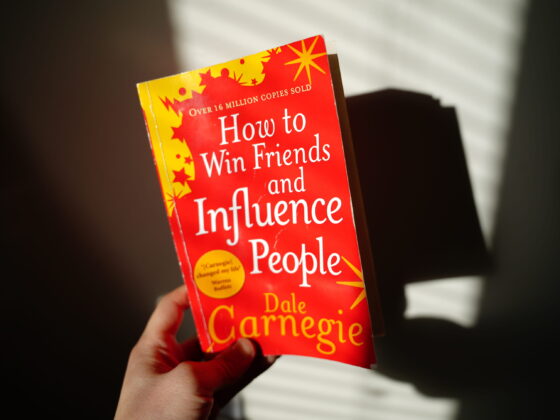
Reading inspires our brains to understand how writing works. Many writers advise new bees to read consistently, yet they do not recommend getting a college degree. J.K. Rowling famously emphasised that to write well, one must read often. Reading is a best practice for many people anyway to pass the time. Beyond improving writing, reading can also be a form of relaxation and inspiration.
While reading books, articles, or well-written blogs, the brain absorbs rhythm, structure, and vocabulary. Lee Child once said, “If you’re not a reader, you’ll never be a writer.” The mind quietly adopts writing techniques, even when we aren’t consciously aware of it.
Share Your Writing on Social Media
Social media platforms now integrate AI tools to help refine grammar or clarity, so don’t let perfectionism hold you back. While AI can fix grammar, just for the heads up, it still needs human intelligence when nuance is required.
Publishing on social media is a great practice. It allows you to develop your tone and voice in public. Avoid overthinking how others might react. In fact, facing criticism will help you become better. Offer your best effort, share at least once a week, and after that, the feeling of awkwardness will disappear.
Make Daily Notes
Making daily notes is a fantastic habit one can acquire. Whenever a thought comes to mind, jot it down immediately. Don’t rely on memory alone.
It could be a sentence, a thought, or even a question; no matter what, as soon as new ideas come to mind, make a quick note.
Take your time in jotting it down before it disappears quickly if not captured. Later, when you come back home and do some admin work on your desk, you can pull up your notes to refresh your writing, which can allow you to become better at writing.
Listen Actively
Listening is another underrated way to improve your writing. Pay attention to how professional speakers use word choice, sentence structure, and flow. They are very good at crafting sentences and refining expressions. That is because they are good writer as well. Definitely, they are great communicators in one form or another.
Platforms like YouTube host incredible communicators, such as Steven Bartlett, host of The Diary of a CEO. Listening to effective speakers expands one’s vocabulary and helps one internalise how meaningful sentences are formed.
Write like you speak
Once you begin practising all of the habits above, make a conscious effort to write the way you speak. You might admire a particular speaker or writer; studying them will inspire you to write.
This approach improves not only your writing but also your speaking. Write every day, even if it’s just for ten minutes. It could be a short post, a journal entry, or a draft you never intend to publish. Write as if the whole world wants to read it, with purpose.
This post itself is written conversationally, almost as if speaking directly to you. When your words sound natural in your mind, they read naturally on the page as well.
Once you’ve practised all of these, you’ll be able to develop your own authentic tone in your writing. All five methods mentioned above are interconnected and work together to strengthen your skills. By consistently following them, you can become a confident writer.