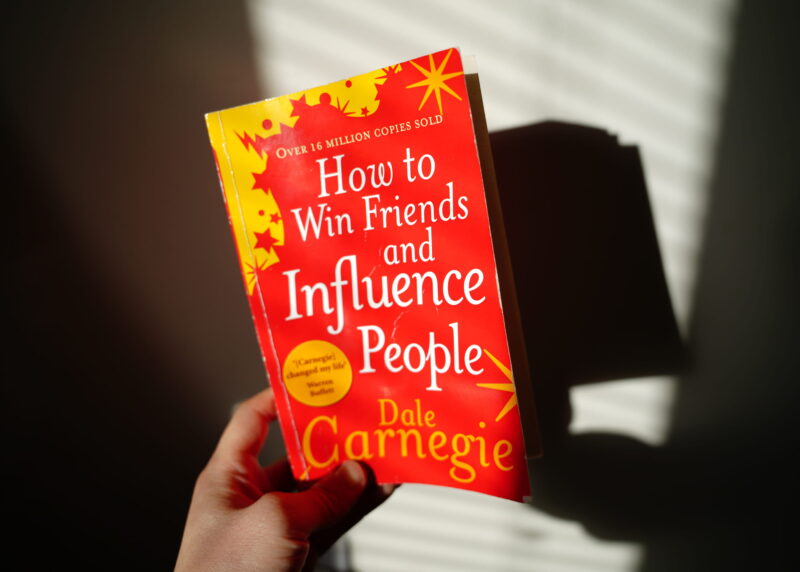
How to Win Friends and Influence People is widely regarded as one of the most influential self-development classic books ever written. First published in 1936 by Dale Carnegie, it remains remarkably relevant even in today’s world of fast communication, crowded workplaces, and digital relationships.
If you have explored many self-help titles but missed this one, you may be overlooking an absolute classic. This book does not introduce complicated or abstract psychology that exists only in theory. Instead, Carbegie has brought together the art of human behaviour, the things we often already know but fail to practice consistently in our day-to-day lives. Before opening the first page, I can guarantee that you already practice many of these ideas in your daily life, perhaps without realising it.
In many ways, Carnegie merely arranged everyday wisdom into a structured guide, allowing readers to revisit these principles whenever life becomes noisy or confusing. Carnegie originally wrote this book as part of the curriculum for those very courses. Even Warren Buffett once credited a Dale Carnegie public speaking course as one of the most valuable investments he ever made. He has spoken about taking the course early in his career, long before becoming the legendary investor we know today.
You might not feel particularly eager to “win friends” or “influence people,” yet the book’s more profound message is far more timeless.
That alone makes it one of the best books to read for anyone interested in self-development.
Table of Contents
About Dale Carnegie
Dale Carnegie was born into modest circumstances. His upbringing was humble, shaped by hard work and limited resources. His parents were farmers who worked tirelessly and grew their own food. From a very young age, he would wake up at 4 a.m. to help care for the family’s livestock.
As a young man, he lived on a farm and travelled nearly three miles to college each day on horseback. Those early challenges quietly helped shape the ideas he would later become known for. Early in his career, he sharpened his public speaking skills through years of debating in high school and college.
Instead of relying on privilege, Carnegie built his reputation through persistence, careful observation, and a deep curiosity about human nature, and this book is compiled with that same spirit.
His Journey Before the Book
Long before How to Win Friends and Influence People became a global bestseller, Carnegie was already running courses.
From 1912 onward, he conducted educational courses for business professionals, managers, and public speakers. Over time, he noticed something through his experiment that technical knowledge alone rarely guaranteed success.
Carnegie’s lessons are pretty simplistic, and he realised that people did not fail because they lacked intelligence in their field. They failed because they lack proficiency in dealing with people or fail to execute concepts in a certain way. That realisation eventually led him to compile his teachings into a single book that is designed to be practical and universally applicable.
The Research Behind the Book
Carnegie did not rely solely on personal opinion. He conducted extensive research, surveys, and behavioural studies.
One well-known survey conducted with the University of Chicago and the YMCA revealed that adults ranked their interests as follows:
- Health
- The ability to understand and get along with other people
This finding reinforced Carnegie’s belief that interpersonal skills were not optional, but essential.
He often said that no matter how skilled someone is in a technical field, a lack of communication ability would limit both career growth and income potential.
The book was written as a textbook for his course in Effective Speaking and Human Relations, alongside other works such as:
- The Art of Public Speaking
- How to Stop Worrying and Start Living
- The Quick and Easy Way to Effective Speaking
- How to Enjoy Your Life and Your Job
Each book served the same purpose: to help ordinary people navigate human relationships with confidence and empathy.
Why This Book Still Matters
What makes this book exceptional is that Carnegie illustrates every principle using real-life examples drawn from business leaders, historical figures, politicians, and everyday individuals, which makes the lessons feel grounded, rather than theoretical.
If someone asked me which principle resonates the most, I would struggle to choose because all of them revolve around building genuine trust, respect, and understanding.
One particularly striking example is Carnegie’s study of Abraham Lincoln. He examined Lincoln’s personality, family life, and leadership style in extensive detail.
Lincoln was not born as a perfect communicator. In fact, early in his political life, he wrote harsh letters and public poems criticising his opponents. Those actions often created unnecessary enemies.
Over time, through painful experience, Lincoln learned an invaluable lesson in the art of dealing with people. Those qualities later defined his presidency and helped secure his place in history.
The Core Principles of the Book
One of the reasons this book remains one of the best books to read for self-development is its clear structure. Dale Carnegie organised his ideas into four practical parts, each focusing on a different aspect of human relationships.
Here is a brief overview:
Part One: Fundamental Techniques in Handling People
- Don’t criticise, condemn, or complain
- Give honest and sincere appreciation
- Arouse in the other person an eager wani
Part Two: Six Ways to Make People Like You
- Become genuinely interested in other people
- Smile
- Remember that a person’s name is to that person the sweetest and most important sound in any language
- Be a good listener. Encourage others to talk about themselves
- Talk in terms of the other person’s interests
- Make the other person feel important – and do it sincerely
Part Three: How To Win People To Your Way Of Thinking
- The only way to get the best of an argument is to avoid it
- Show respect for the other person’s opinion. Never say, ‘You’re wrong’
- If you are wrong, admit it quickly and emphatically
- Begin in a friendly way
- Get the other person saying ‘yes, yes’ immediately
- Let the other person do a great deal of the talking
- Let the other person feel that the idea is his or hers
- Try honestly to see things from the other person’s point of view
- Be sympathetic to the other person’s ideas and desires.
- Appeal to the nobler motives.
- Dramatise your ideas.
- Throw down a challenge.
Part Four: Be A Leader: How To Change People Without Giving Offence Or Arousing Resentment.
- Begin with praise and honest appreciation
- Call attention to people’s mistakes indirectly
- Talk about your own mistakes before criticising others
- Ask questions instead of giving direct orders
- Let the other person save face
- Praise the slightest improvement and praise every improvement. Be ‘hearty in your approbation and lavish in your praise’
- Give the other person a fine reputation to live up to
- Use encouragement. Make the fault seem easy to correct
- Make the other person happy about doing the thing you suggest
Some quotes worth memorising
"Your ability to your salary lies in the ability of dealing with people."
"Don't complain about the snow on your neighbour's roof when your own steps is unclean."
"A man without a smiling face must not open a shop."
"One of the first lessons a politician learns is this: to recall a voter's name in statesmanship. To forget is oblivion.
And the ability to remember names is almost as important in business and social contracts as it is in politics."
"Do not resist or debate. This only raises barriers."
"A drop of honey catches more flies than a fall of gall - Abharan linclon."
"Three-fourths of the people you will ever meet are hungering and thirsting for sympathy. Give it to them, and they will love you."
"Give a dog a bad name, and you may as well hang him, but give him a good name and see what happens."
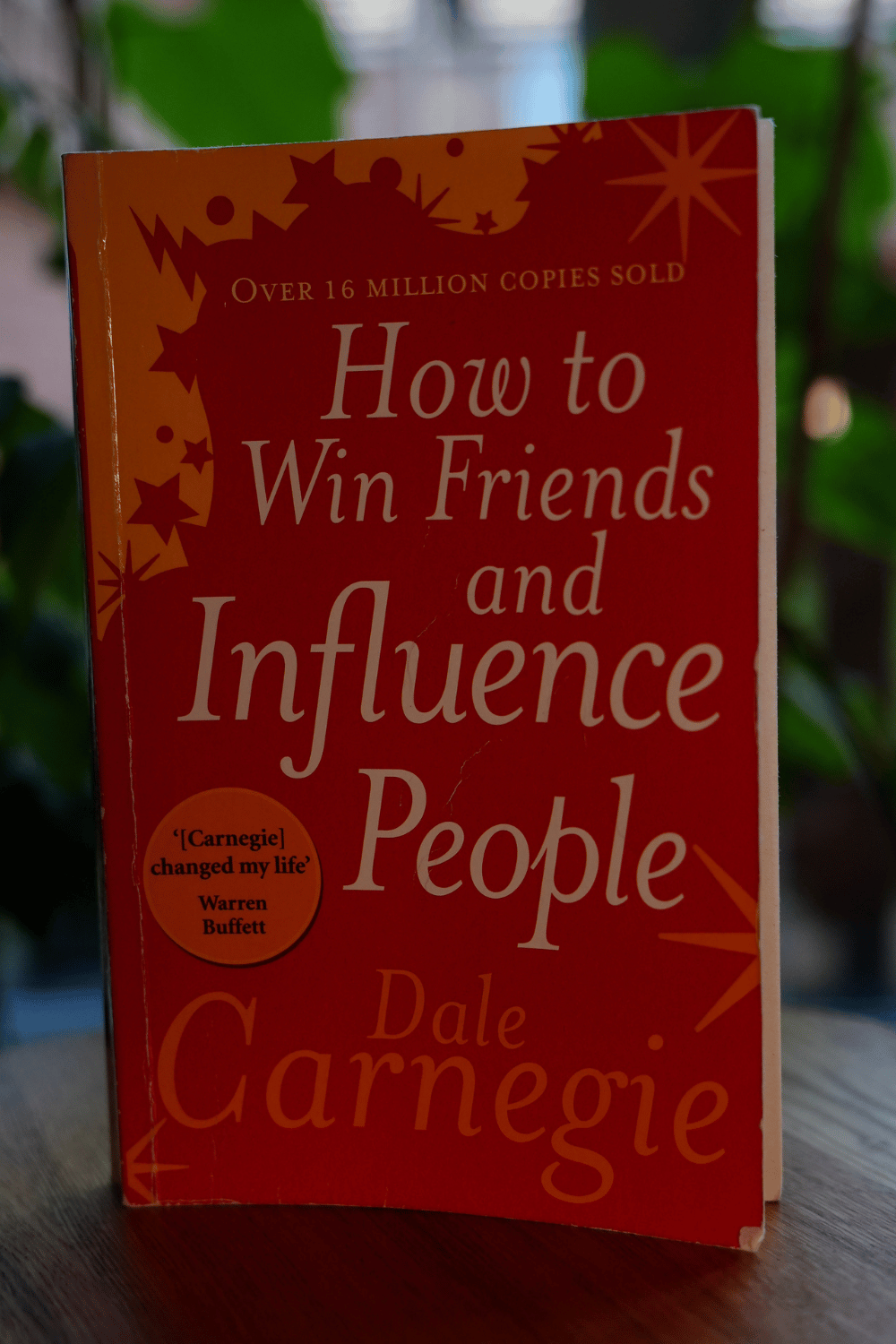
Grab your copy of ‘How to Win Friends and Influence People’—you’ll be surprised how much it can shift your everyday interactions.









2 comments
Very inspirational. I bought this book a year ago and it is amazing! Still reading through it.
– Abdullah The Fighter🥊📈
Ive already read this book twice. Its worth it. 🤝